Accepting a Microscopy Room: What to Check Before Equipment Arrives
一、You are accepting a room, not an instrument
Problems discovered on delivery day often only appear three months later: fungal growth on coatings, slight shake in the image, stiff focusing. Changing the room at that point costs several times what it would have cost during the fit-out.
So acceptance takes two rounds. Check the room before equipment arrives, then check the light path and mechanics after installation. The first decides whether the fit-out was worth doing; the second decides whether the instrument can actually be used.
二、Humidity: start logging before anything else
Most people watch temperature, but humidity matters more. Above sixty percent relative humidity the risk of coating fungus rises sharply, while dry winter air lets static pull dust onto lenses and samples.
The practical move is to place a temperature and humidity logger the day the fit-out finishes, before any equipment, and let it run for two weeks. That data tells you the peak in the rainy season, the low in the heating season and how much the room swings in a day. Deciding on a dehumidifier or a bench humidifier from that record is far better than guessing.
三、Benches: height and load
Bench height should follow the main users, not the drawings. Most writing desks sit at about 75 cm, and a microscope on one puts the eyepieces below eye level, so the operator leans forward all day.
Load capacity also has to be settled early. Stereo microscopes and interactive teaching systems weigh considerably more than a standard stand, so panel thickness and frame spacing need confirming with the supplier. This one cannot wait for delivery.
四、Lighting: ceiling panels are not enough
Uniform ceiling light is not the same as good light. Observation needs even illumination on the sample without hard shadows. A common solution is an adjustable task lamp above the bench, offset to one side and clear of the operator's line of sight.
Less often considered is the ratio of ambient to task illuminance. Working in near darkness makes pupils dilate, depth of field shallows and low-contrast samples become harder, not easier.
五、Power and earthing
1. Socket count and position
Allow at least two sockets per workstation, and not all on the same power strip. Leave a few spare for temporary additions such as cameras, monitors and capture cards.
2. A separate circuit
A microscopy room is better on its own circuit rather than sharing with air conditioning and lighting. Large loads starting and stopping on a shared circuit cause voltage dips that show up as brightness variation in the image.
3. Earthing
Imaging equipment is sensitive to ground loops. Incorrect or missing earthing produces fixed stripes across the image. Measuring it with a tester at handover beats days of later troubleshooting.
4. UPS placement
If an uninterruptible supply is fitted, put it beside the rack rather than by the door or in a corner. Cable length and routing both affect how well it performs.
六、Traffic flow and dust
Shoe-change zones, thresholds and ventilation direction all determine the dust level in the room. Sample preparation, cutting and polishing should not share a space with microscopy. Without independent extraction, dust follows the airflow straight in.
Every window needs seals and door gaps need draught excluders. A door facing an air supply blows dust onto the bench the moment it opens.
七、What to record at handover
A simple six-column sheet is enough: date, room, logger readings, power-on self-test result for each instrument, measured lighting and power values, and the issues found with their actions.
The point is to bind the record to the equipment: which microscope sits at which bench in which room. When something goes wrong later, that shortens the search immediately.
八、Closing
The value of a microscopy room is not that it looks finished, but that it keeps environmental variables predictable.
If you are building or have just rebuilt a microscopy room, tell us the floor area, number of workstations, planned instruments and local climate, and we will send a checklist you can work through item by item.
Equipment mentioned
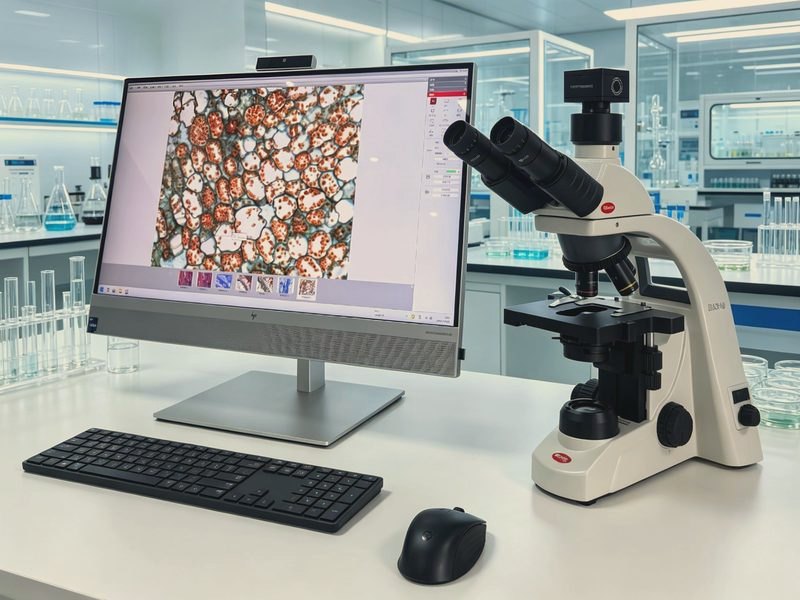
BA310 Digital Imaging Microscope
The BA310 digital imaging microscope is built for routine ob
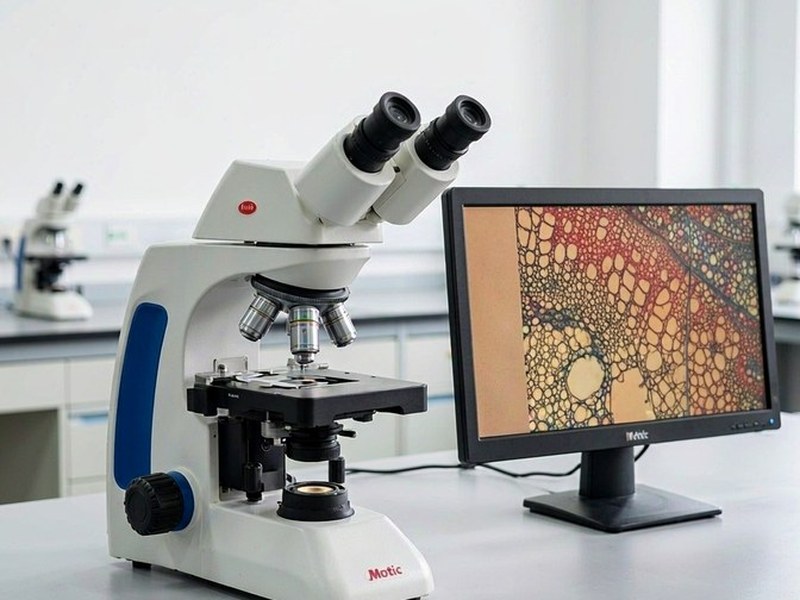
M200D Biological Digital Microscope
The M200D digital biological microscope is designed for teac
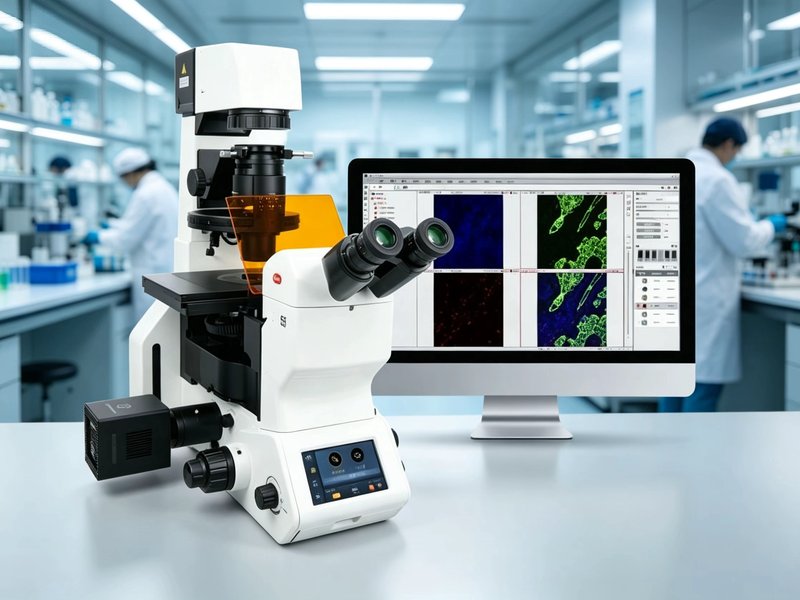
PX55 FS8 Fully Motorized Inverted Fluorescence Microscope
A fully motorized intelligent inverted fluorescence microsco