Multichannel Fluorescence Imaging Specifications
1. Optical path and channel configuration
• At least four channels covering DAPI, FITC, TRITC and Cy5, expandable to seven or more
• Epi illumination where excitation and emission share the objective, split by a dichroic mirror
• Independent shutter or light source switching per channel, to limit bleaching
• Switching by filter wheel, multiband filter or time multiplexed LED excitation
• Note: more channels only help when the chosen combination can actually suppress bleed through
2. Filter set parameters: the key item
• Each filter set should state excitation range, emission range and dichroic cut on wavelength
• Narrow bands of 25 nanometres or less resist bleed through, while wide bands give more light
• Bandpass emission filters are preferred for multicolour overlay, longpass only for single colour
• Peak transmission of 90 percent or more, with surface flatness and coating hardness stated
• Note: claiming support for DAPI, FITC and TRITC is not enough without wavelength ranges
3. Bleed through and channel isolation
• Adjacent channel bleed through should be specified, for example DAPI leaking 1 percent or less into FITC
• Acquiring the weakest channel first and the strongest last reduces cross talk in overlays
• Slide scanning systems should state whether channels are scanned whole slide then merged
• Autofluorescent samples such as plant tissue need autofluorescence removal or spectral unmixing
• Note: bleed through is the largest error source in quantitative fluorescence and cannot be fixed in post
4. Light source and intensity balance
• LED illumination with independently adjustable wavelengths and stability within 2 percent per hour
• Brightness adjustable per channel so weak channels are not underexposed and strong ones do not saturate
• LED lifetime of 20000 hours or more, reducing replacement and recalibration
• Intensity calibration records should be kept so data from different sessions remain comparable
• Note: quantitative multicolour comparison requires reproducible channel intensity, not an approximate match
5. Objectives and chromatic registration
• Fluorescence dedicated objectives with high transmission and low autofluorescence, aperture chosen by sample
• Apochromat objectives reduce focal shift across wavelengths and improve overlay alignment
• Focus difference between channels should stay within one depth of field to avoid colour fringes
• Immersion objectives should state medium refractive index and temperature range
• Note: ghosting in overlays usually comes from objective chromatic aberration, not from software alignment
6. Camera and exposure control
• Monochrome sCMOS or CMOS with quantum efficiency of 70 percent or more from 500 to 700 nanometres
• Bit depth of 12 bits or more, with full well capacity and read noise specified
• Exposure range from 10 microseconds to 10 seconds at least
• Hardware triggering synchronised with light source and filter wheel
• Note: for weak fluorescence, noise performance matters more than pixel count
7. Acquisition and overlay
• Support for multichannel sequences, Z stacks, time series and plate scanning
• Automatic channel registration with manual fine adjustment, accurate to one pixel
• Output keeps raw channel data, not only merged images
• Background subtraction, flat field correction and bleaching compensation provided
• Note: a system that only exports merged images cannot be re analysed, so results are not reproducible
8. Environment and light protection
• Dark room or controlled lighting, with stray light blocked between objective and sample
• Ambient 15 to 30 degrees Celsius, live imaging at 37 degrees Celsius within half a degree and 5 percent CO2
• Heat management for light source and camera, since thermal drift affects focus in long acquisitions
• Operators need wavelength appropriate eye protection, especially for ultraviolet channels
• Note: light leaking into the path can exceed sample signal in weak fluorescence channels
9. Where procurement goes wrong
• Choosing by channel count alone without checking filter wavelengths and bleed through, so colours contaminate each other
• Light source channels that cannot be dimmed independently, leaving weak channels always over or underexposed
• Systems that export only merged images, discovered at acceptance to be impossible to re analyse
Equipment mentioned
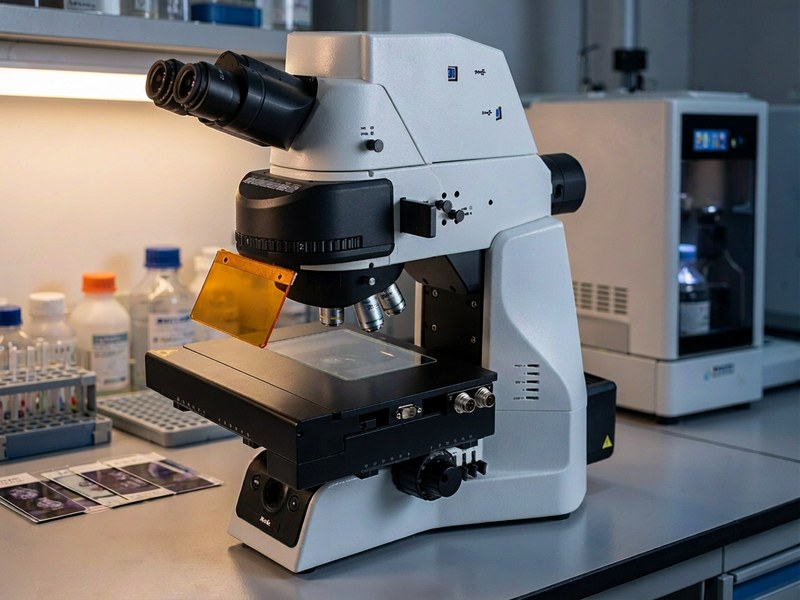
PA53 FS6 SCAN Multicolor Fluorescence Image Analysis System
The PA53 FS6 SCAN digital slide scanning platform works with
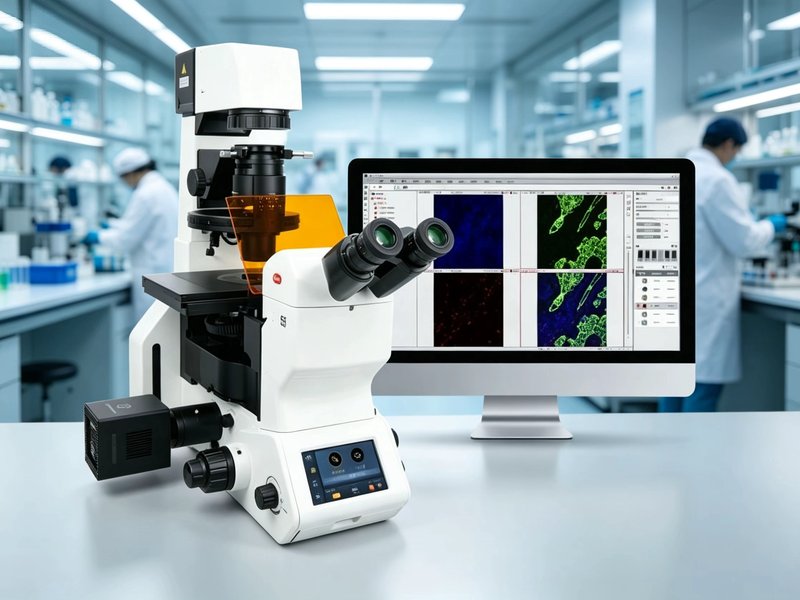
PX55 FS8 Fully Motorized Inverted Fluorescence Microscope
A fully motorized intelligent inverted fluorescence microsco
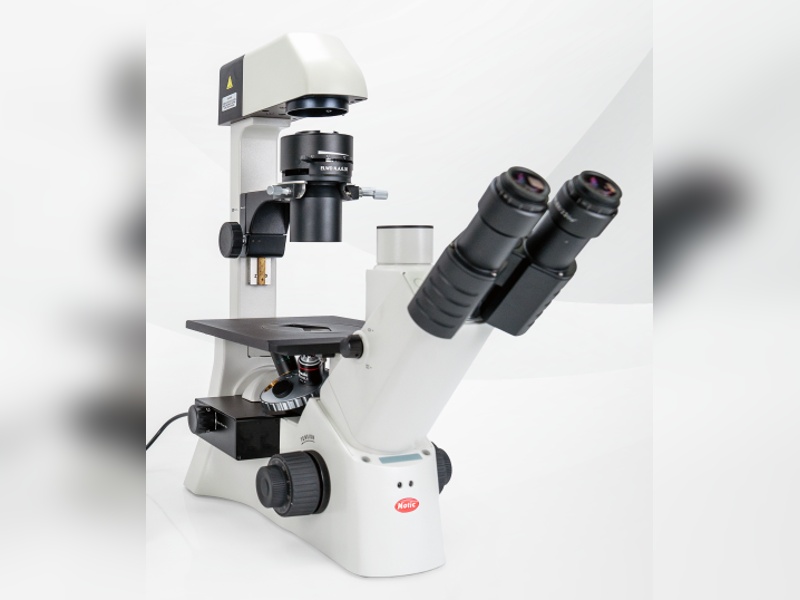
AE31E FL Inverted Fluorescence Microscope
An inverted fluorescence microscope with an LED fluorescence