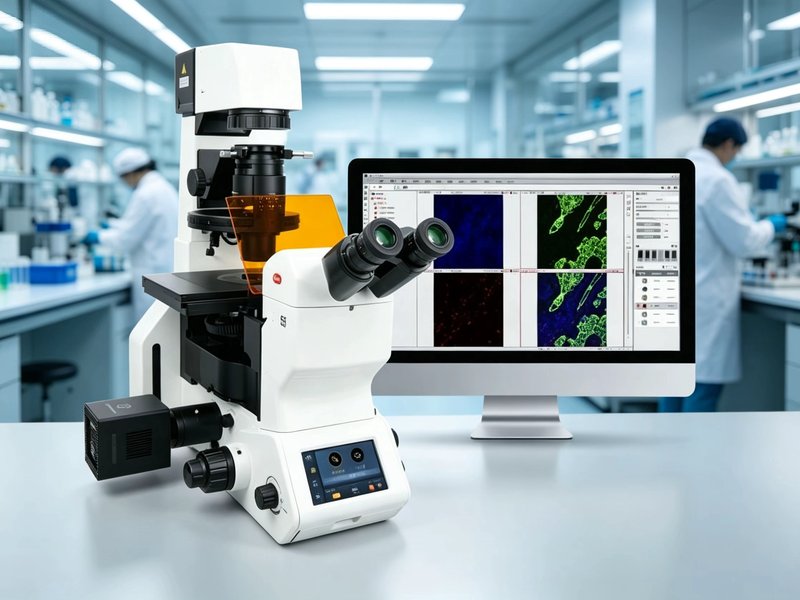
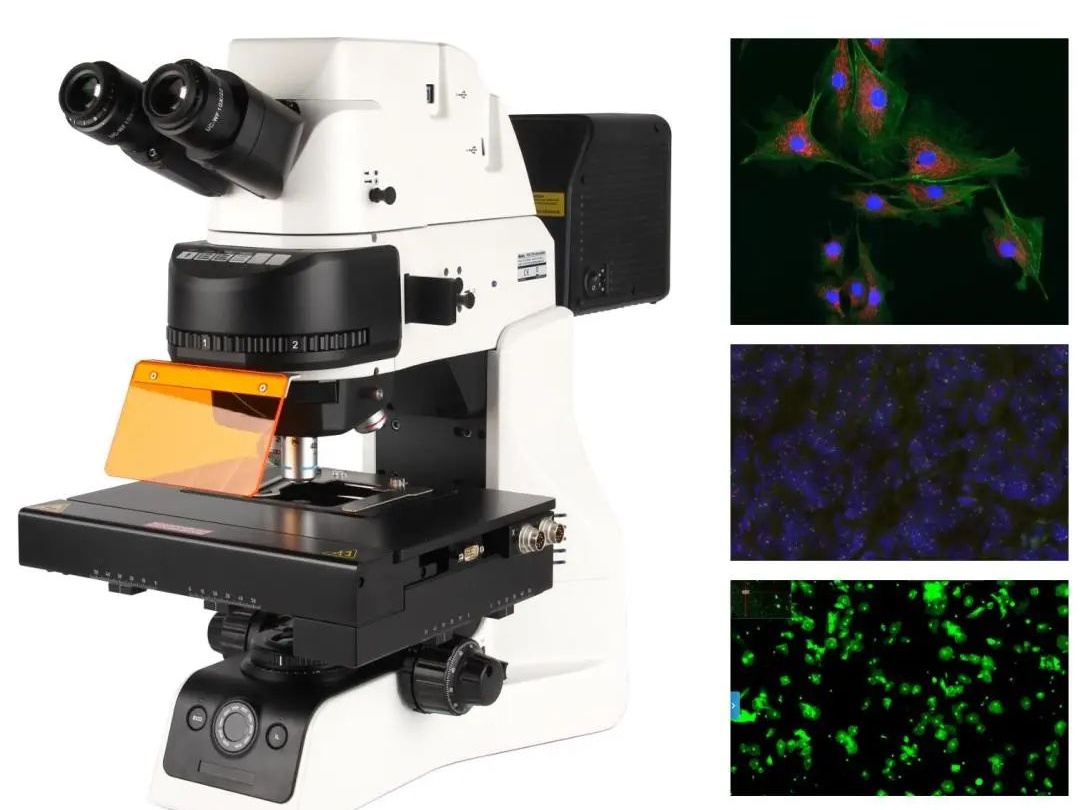
Research Inverted Microscope Specifications
1. Optical system
• Infinity corrected optics with 45 or 60 mm parfocal distance
• Inverted layout with objectives below the stage, suited to flasks, dishes and multiwell plates
• Field number of 22 mm or more, up to 25 on wide field models
• Light path switchable between eyepieces and camera at ratios such as 100 to 0, 20 to 80 and 0 to 100
2. Objectives and motorised nosepiece
• Six position motorised nosepiece with coding, so magnification follows into the software
• Long working distance objectives at 4X, 10X, 20X and 40X, with working distances of 3 to 8 mm
• Above 40X check that working distance clears the dish bottom
• Phase contrast objectives need matching annuli, one per magnification
• Objective threads are RMS or M25, to be confirmed before buying third party optics
3. Contrast methods
• Brightfield as standard
• Phase contrast with annulus and phase objectives, the usual way to view unstained living cells
• Differential interference contrast needing polariser, prisms and analyser for cell outlines and detail
• Fluorescence as described below
• Motorised or one-touch switching is preferable, since manual part changes are slow and error prone
4. Fluorescence light path
• Four or more channels, commonly DAPI, FITC, TRITC and CY5
• LED illumination with 25000 hours or more and no warm-up, or a 100 W mercury lamp with warm-up and short life
• LED channels controlled independently with software dimming to reduce photobleaching
• Filter sets must match the excitation and emission bands of the dyes actually used
• Channel switching within 100 milliseconds for simultaneous multicolour viewing
5. Stage and vessel compatibility
• Manual or motorised X Y stage with at least 120 by 80 mm travel
• Interchangeable inserts for flasks, 35 and 60 mm dishes, multiwell plates, chamber slides and standard slides
• Motorised repeatability of 1 micrometre or better for multipoint work and stitching
• CO2 and heated stage at 37 degrees Celsius for long live cell sessions
• Load capacity and stack height must still allow focusing once incubation hardware is fitted
6. Motorised focus and autofocus
• Motorised Z with steps of 20 nm or less
• Autofocus by image contrast or infrared beam for well-by-well and time lapse work
• Z stack acquisition and extended depth of field
• Position recoverable after power or software restart, via absolute encoding or homing
7. Camera port and software
• C mount camera port for sensors up to one inch
• Software control of objectives, channels, stage, Z and camera with programmable sequences
• Multichannel merging, time lapse, multipoint and large area stitching
• Support for third party cameras and open formats such as TIFF and OME-TIFF
• Coordination with confocal heads or micromanipulators on some models
8. Power and environment
• Power supply AC 220 V, 50 Hz
• Operating temperature 20 to 25 degrees Celsius, drift within 2 degrees per hour
• Relative humidity up to 70 percent
• Anti-vibration table, essential for live cell and high magnification work
• Once incubation is fitted, keep heat and airflow away from the sample
9. Where procurement goes wrong
• Only inverted microscope is specified and a manual uncoded nosepiece arrives, so magnification is never recorded and data are untraceable
• Two fluorescence channels are supplied, blocking double labelling, and adding channels later means replacing the whole module
• Only one stage insert is supplied, so flasks and plates cannot share a stage and the top plate is swapped all day