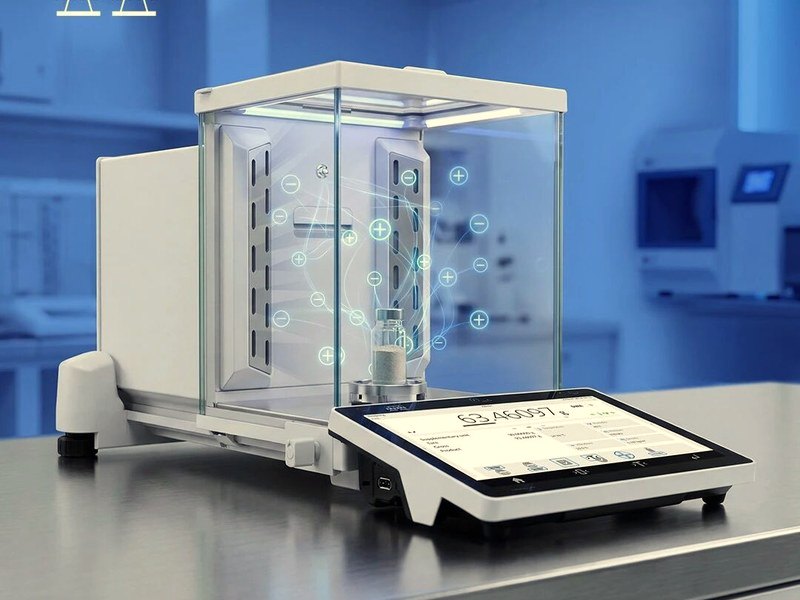
Microbalance Specifications
1. Weighing performance: the key item
• Readability of 0.1 microgram, one part in ten million, or 1 microgram, one part in one hundred thousand
• Capacity by model, around 5 g, 21 g or 52 g
• Readability and capacity trade against each other, no balance gives 0.1 microgram at 50 g
• Define the smallest sample and the largest capacity first, then choose readability
2. Repeatability and linearity
• Repeatability as standard deviation within 0.15 microgram at 0.1 microgram readability and 5 percent load
• Linearity deviation within 0.2 microgram
• Off-centre loading error within 0.3 microgram
• Repeatability reflects real working accuracy and matters more than readability
• Note: published repeatability is measured in stable, draught-free conditions and is worse in practice
3. Calibration
• Internal motorised weight for automatic calibration, triggered by temperature change or time
• External calibration with E1 or E2 class weights
• Internal calibration is preferable, since a microbalance is sensitive to environment and manual routines lapse
• Calibration records must be traceable for GLP and GMP
4. Draft shield and pan
• Fully enclosed draft shield opening on three sides to keep air movement out
• Small pan, typically 20 to 30 mm on a microbalance, with the sample placed centrally
• Anti-static device, usually an ioniser, to remove static effects on trace weighing
• Built-in or external ioniser selected by ambient humidity
5. Settling time and response
• Settling time of 10 seconds or less, typically 3 to 6
• Longer settling means slower work, and speed should not be over-valued for trace samples
• Weighing modes including standard, piece counting, percent, formulation and density
6. Interfaces and data
• RS-232 or USB for printer or LIMS connection
• Ethernet and wireless on some models
• Export with time stamp and operator identity
• Barcode scanning for sample traceability
7. Environmental requirements: a key item
• Operating temperature 15 to 30 degrees Celsius, drift within 2 degrees per hour
• Relative humidity 45 to 60 percent, low humidity causing static and high humidity causing moisture uptake
• Away from air conditioning outlets, doors and walkways
• Marble anti-vibration bench recommended, in a separate or stable area
• Note: nine out of ten microbalance complaints trace to the environment, not the instrument
8. Compliance functions
• Tiered user access, audit trail and electronic signature under 21 CFR Part 11 as options
• Calibration certificates and traceable weights
• IQ OQ PQ validation packages
• Expected in pharmaceutical, food and precious metal work
9. Where procurement goes wrong
• Readability alone is compared without repeatability, and a 0.1 microgram model performs five times worse in a real room
• No anti-static device, so readings drift in dry seasons and repeatability never settles
• The balance sits in draught or traffic, where no instrument can weigh accurately and no service visit can help