Buying Microscopes for a University: The Mistake Is Buying on Specifications
Buying microscopes for a university: the usual mistake is buying on specifications
Across dozens of university projects a year, the configuration list is rarely wrong because it was too expensive. It is wrong because it points the wrong way.
The requirement form usually says something like "biological microscope, 40x-1000x, with imaging", which contains nothing that determines what to buy. What determines it is: who uses it, how many students per class, which samples, whether photographs must be archived, and who repairs it.
1. Separate three kinds of use
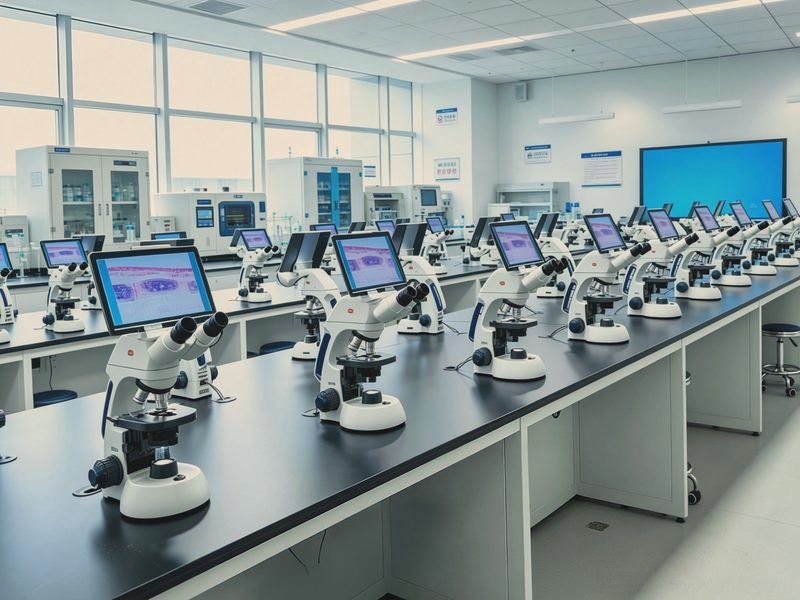
Public laboratory classes. High volume, many students, fixed samples such as onion epidermis, cheek cells and blood smears. The priority is durability, simple operation and resistance to clumsy handling. This tier does not need high-power objectives or complex software.
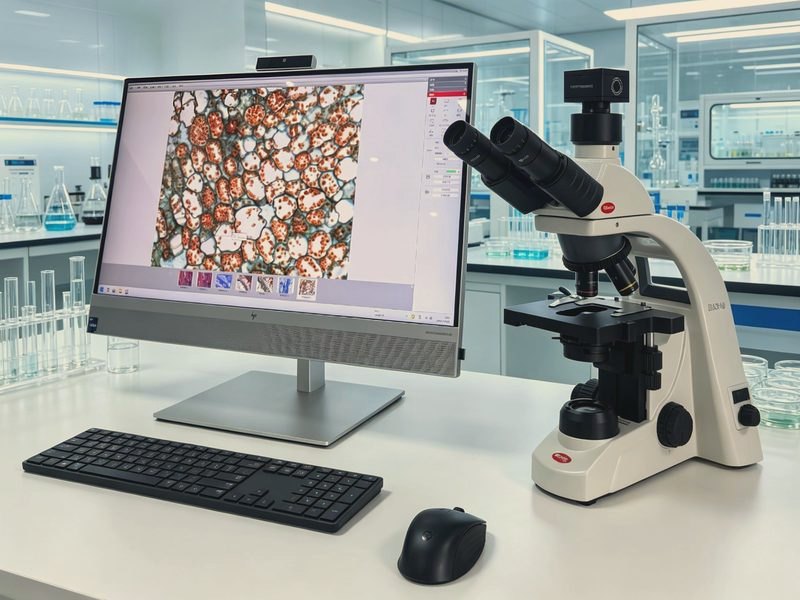
Major courses and final-year projects. Students prepare their own slides, capture images and measure data. An imaging system is required, along with export of original images and software that measures length and area. Objective correction grade starts to matter here.
Research groups. Samples vary, methods change, fluorescence or live-cell observation may be needed. These cannot be bought as a general-purpose configuration; the direction of the research sets it.
Submit all three as one list and the usual outcome is that the teaching laboratory finds it expensive while the research group finds it inadequate.
2. Is a digital classroom worth it
This is the most frequently asked question, and the answer depends on teaching method, not budget.
Worth it when: a class exceeds forty students, the teacher needs to demonstrate while explaining, assignments and screenshots must be collected centrally, or one student's field must be shown to the whole class.
Not worth it when: classes are small, students work independently, and the teacher moves between benches.
The real value is not digitisation as such. It is turning demonstration from "crowd around one instrument" into "everyone sees the same field", and turning reports from pasted photos into traceable records.
3. Details that get overlooked
Objective count and combination. A standard set of 4x, 10x, 40x and 100x looks complete, but 100x is an oil objective that is used rarely and maintained with difficulty. In teaching, 40x does most of the work; specifying a higher correction grade there is more useful than adding a second 100x.
Power and cable management. Thirty instruments in one laboratory means cables and sockets become a hazard. A model with cable routing saves considerable trouble.
Service response. A teaching instrument that fails affects an entire class. Put a response time into the contract; it is worth more than an extra accessory.
Training. New equipment nobody knows how to use is the same as no equipment. Require one teacher-facing training session and keep the contact details.
Closing note
The key to university procurement is to write requirements separately for the three kinds of use, then merge them into a workable plan. Buying everything at once does not necessarily save money; tiered configuration is often easier to get through budget review.
If you are planning a laboratory build, tell us the courses, class sizes and existing equipment. We will propose tiered configurations by scenario, without starting from a brand.